Powering the Machine
Everyone watches whether Congress is buying NVIDIA. The more revealing question is one layer down. The AI build-out is not just chips — it is the hyperscalers that run the models and, above all, the electricity, nuclear, and cooling the data centers cannot operate without. This paper maps congressional trading across all three layers, and finds the freshest money in the least-watched one: power.

This paper maps congressional stock trading across the AI build-out, modeled as three layers: compute (chips), platforms (hyperscalers and software), and power (electricity, nuclear, grid, and cooling). Across 41 representative tickers, members are positioned in all three — but the analytically important finding is the recency of the power layer. Members have held legacy utilities for years; their buying in the AI-power names, by contrast, is overwhelmingly new. Roughly 91% of disclosed purchases in Constellation Energy, 68% in Vertiv, and 54% in Vistra came after January 2024 — against 8% for Dominion and 19% for NextEra. The pattern is the report's thesis: the fresh congressional money is not in the chip everyone watches; it is in the electricity and cooling the data centers depend on. The breadth is bipartisan, and it connects to the series' broader motif — officials holding the companies federal policy moves, including the chipmakers the government itself now funds and part-owns.
- Key findings
- The most-held AI name isn't NVIDIA — it's Microsoft (131 members), then Amazon (114) and Alphabet (84). NVIDIA is fourth at 69.
- The power pivot: ~91% of members' buying in Constellation, 68% in Vertiv, and 54% in Vistra came after Jan 2024 — vs 8% for Dominion.
- In compute, Broadcom shows the AI surge: 74 of its 123 buys (60%) are post-2024; NVIDIA logged 121 buys since 2024.
- Breadth is bipartisan: Ro Khanna (D) holds 35 of 41 AI names; Lisa McClain (R) 24, Jefferson Shreve (R) 23.
- The engine agrees: NextEra is the top-scoring AI-adjacent signal (S-tier), with Microsoft, Alphabet, Amazon, Oracle and Palantir close behind.
1. Introduction: watch the second layer
Congressional trading in artificial intelligence is usually reported as a single question: is so-and-so buying NVIDIA? It is the wrong unit of analysis. NVIDIA is one company in one layer of a build-out that runs from silicon to substations. A useful map has three layers. Compute is the chips — the GPUs and the equipment that makes them. Platforms are the hyperscalers and software companies that turn chips into products. And power is the part the headlines miss: a modern AI data center is, physically, an enormous electrical load, and the binding constraint on the whole build-out is increasingly not chips but megawatts.
The research question follows from the map: where, across these three layers, is congressional money actually positioned — and where is the new money going? The answer to the first half is “everywhere.” The answer to the second is the point of this paper: the freshest buying is concentrated in the power layer, the one least associated with “AI” in the public mind and most associated with it in an engineer's.
2. Data and methodology
We define a 41-ticker map of the AI build-out across the three layers and measure congressional disclosures against it. Counts are taken from the deduplicated STOCK Act set (the raw feed double-ingests many filings), and option-exercise records are excluded so that “buys” mean open-market purchases, not vesting events. For each name we record the number of distinct members who have traded it, total purchases, and — the key variable — purchases dated on or after January 1, 2024, the heart of the AI-capex wave. The “recency share” (post-2024 buys ÷ all buys) is what separates a long-held position from a fresh AI-thesis bet. The method shared across this series is documented at GovGreed Research; figures were verified live on June 30, 2026.
One caution up front. The 41-name map is representative, not exhaustive, and a ticker can belong to the AI story for reasons unrelated to it (Microsoft is held for a hundred reasons besides AI). We therefore lean on the recency and convergence signals — what changed and what clustered — rather than treating every holding as an AI bet. And as always, a disclosed holding is legal; the overlaps here are conflict-of-interest patterns, not proof of misconduct.
Table 1 · The AI build-out in Congress's portfolio, by layer| Company | Ticker | Layer | Members | Buys since '24 |
|---|---|---|---|---|
| MSFT | PLATFORM | 131 | 124 | |
| AMZN | PLATFORM | 114 | 114 | |
| GOOGL | PLATFORM | 84 | 72 | |
| NVDA | COMPUTE | 69 | 121 | |
| NEE | POWER | 52 | 25 | |
| AVGO | COMPUTE | 49 | 74 | |
| ORCL | PLATFORM | 42 | 34 | |
| META | PLATFORM | 40 | 59 | |
| ETN | POWER | 35 | 18 | |
| AMD | COMPUTE | 28 | 52 | |
| GEV | POWER | 10 | 23 | |
| CEG | POWER | 9 | 10 | |
| VST | POWER | 8 | 7 | |
| VRT | POWER | 7 | 13 |














Deduplicated disclosures; option-exercise records excluded. “Buys since '24” = open-market purchases dated on/after Jan 1, 2024. Verified June 30, 2026. Tap any ticker for the full holder list.
3. Layer one — compute
The chip layer is the most-watched and, by member count, broadly held: NVIDIA sits in 69 members' disclosures (304 lifetime buys, excluding the option-exercise records that distort raw NVIDIA tallies). But the more telling compute signal is Broadcom: 49 members, and 74 of its 123 purchases — 60% — landed after 2024, the steepest AI-era acceleration of any chip name. AMD (52 post-2024 buys), the equipment makers Applied Materials and ASML (ASML at 62% post-2024), and the memory makers Micron and TSMC round out a layer that members were already in and have been adding to through the capex wave.
Figure 1 · Compute layer — congressional buys since Jan 20244. Layer two — platforms
The platform layer is where the most members are, because these are the index-staple megacaps. Microsoft is the single most-held name in this entire analysis — 131 members — followed by Amazon (114) and Alphabet (84, plus another 66 in the GOOG share class). Two names stand out as genuinely AI-native in their congressional buying rather than legacy holdings: Oracle, reborn as a data-center landlord (34 post-2024 buys), and Palantir, whose congressional position is almost entirely recent — 40 of its 41 disclosed buys came after 2024. Where compute members were adding to old positions, several platform members were opening new ones tied directly to the AI cycle.
5. Layer three — power, and the pivot
This is the finding. The power layer divides cleanly into two groups, and the split is the whole story. The legacy utilities — NextEra, Dominion, Southern, Duke — are long-held income stocks; members have owned them for years, and only a small slice of their buying is recent (Dominion 8%, Southern 17%, NextEra 19% post-2024). The AI-power names are the opposite: nuclear generators, grid and cooling suppliers whose congressional buying is almost entirely new. About 91% of disclosed purchases in Constellation Energy — the nuclear operator restarting Three Mile Island to feed data centers — came after January 2024; Vertiv (data-center cooling) is 68%, Cameco (uranium) 60%, Vistra 54%, and Quanta (grid construction) 50%. GE Vernova, the power-equipment company spun out in 2024, drew 23 congressional buys — all of them necessarily in the window, but a deliberate rush into a brand-new AI-power pure-play all the same.
Figure 2 · The pivot — share of all congressional buying that came after Jan 2024
6. Convergence and the engine's read
Two independent checks support the map. First, herd formation: the AI names dominate GovGreed's 3+-member convergence signals. Microsoft has formed repeated herds (up to seven members, A-tier); NVIDIA, Alphabet, Amazon, Meta, Broadcom, and Micron all cluster — and so, tellingly, do power names: Constellation and Eaton each registered fresh 3-member herds, the power layer reproducing the convergence pattern of the chip layer. Second, the signal engine: the highest-scoring AI-adjacent signal in the system is not a chipmaker but NextEra (S-tier, score 76), with Microsoft (A+, twelve signals), Alphabet, Amazon and Oracle (S-tier), Palantir (A+) and Broadcom (A+) close behind. Breadth, recency, herding, and the model all point the same way.
7. The AI portfolios
Measured by breadth — how many of the 41 names a member has traded — the AI build-out concentrates in a familiar, and bipartisan, set of offices. Ro Khanna (D-CA), the most active trader in Congress, has held 35 of the 41 — effectively the entire stack, from NVIDIA to the nuclear names. The rest of the leaderboard is split across both parties.
Table 2 · Broadest AI-build-out portfolios (of 41 tracked names)| Member | Party | State | AI names held |
|---|---|---|---|
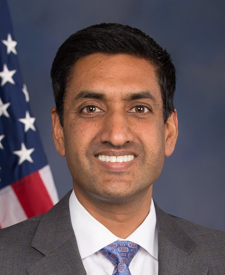 RKRo Khanna RKRo Khanna | D | CA | 35 |
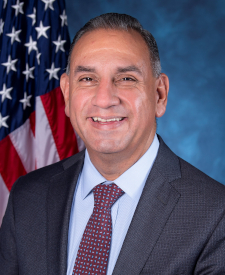 GCGilbert Cisneros GCGilbert Cisneros | D | CA | 29 |
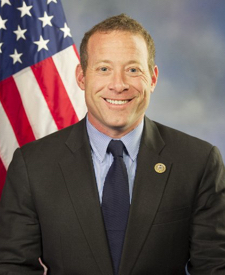 JGJosh Gottheimer JGJosh Gottheimer | D | NJ | 25 |
 LMLisa McClain LMLisa McClain | R | MI | 24 |
 JSJefferson Shreve JSJefferson Shreve | R | IN | 23 |
 RBRobert Bresnahan RBRobert Bresnahan | R | PA | 23 |
 MMMichael McCaul MMMichael McCaul | R | TX | 20 |
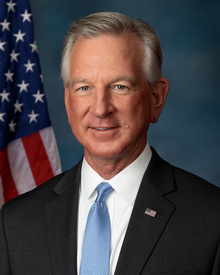 TTTommy Tuberville TTTommy Tuberville | R | AL | 20 |
Distinct AI-build-out tickers (of 41) each member has disclosed trading. Verified June 30, 2026. Many positions are spouse- or manager-held; all are legally disclosed.
8. Discussion
The three layers complete a picture this series has been assembling. The contracts paper showed the government as the economy's biggest buyer; the government-as-VC paper showed it taking grants, loans, and equity in the chipmakers — Intel, TSMC, Micron — that sit in this report's compute layer; and the checkbook paper showed the President holding two of them. This paper adds the demand side: the legislators who write AI, energy, and permitting policy are personally positioned across the same build-out, and their newest money is in its tightest bottleneck — power.
The reason the power pivot matters more than another NVIDIA headline is that power is where policy bites hardest. Nuclear restarts, grid interconnection queues, transmission permitting, and data-center siting are legislative and regulatory questions, not just market ones. A member adding Constellation or a grid builder in 2025 is taking a position in an outcome that committees and agencies materially shape. We assert no causation — these are disclosed, often manager-directed holdings — but the structural proximity of the decision-maker to the AI-power trade is exactly the conflict surface the next few years will test.
9. Limitations and caveats
- The 41-name map is representative, not exhaustive. Other names belong to the AI build-out; these are the liquid, widely-held proxies for each layer. Totals are illustrative of the pattern, not a complete census of AI exposure.
- A holding is not an AI bet. Megacaps like Microsoft are held for countless reasons. We lean on recency and convergence — what changed, what clustered — precisely to separate AI-thesis buying from incidental ownership.
- Recency cuts both ways. GE Vernova's 100% post-2024 share is partly mechanical — it only began trading in 2024. We foreground Constellation, Vertiv, Vistra, and Cameco, which existed well before the window, as the cleaner evidence of a deliberate pivot.
- Exercises excluded; trades deduplicated. Counts come from the deduplicated set with option-exercise records removed, so NVIDIA's figures are not inflated by the vesting events that distort raw tallies.
- Holding ≠ wrongdoing. Every position here is disclosed and legal, frequently spouse- or manager-held. The overlaps are conflict-of-interest patterns, not proof any trade was improper.
10. Conclusion
The question worth asking about Congress and AI was never “who owns NVIDIA.” It is which layer of the build-out the smart money is moving toward — and the answer is the one the public conversation overlooks. Members have held the chips and the megacaps for years; what they are buying now is the electricity, the nuclear, and the cooling that decide whether the data centers can run at all. The build-out's bottleneck became the portfolio's frontier. As with every paper in this series, none of it was hidden: it is in the same disclosures the law already requires, waiting to be read one layer down.
Data availability
Primary source. Trading data are congressional Periodic Transaction Reports filed under the STOCK Act, as tracked in GovGreed's Congress database; per-ticker holder lists are on every stock-ownership page. Herd and signal-tier reads come from GovGreed's convergence detector and signal engine.
Derived dataset. The 41-ticker, three-layer map and the post-2024 recency shares are queryable live; the method shared across the series is documented at GovGreed Research. The full per-ticker, per-member breakdown is available on request — see “Sourcing this for a story?” below.
Reproducibility & verification
This is an independent working paper. Produced by GovGreed Research; not externally peer-reviewed. Every figure was re-derived live on the publication date from the deduplicated disclosure set (DISTINCT ON on member, transaction type, trade/filed dates, ticker, amount), with option-exercise records excluded via a description filter so open-market buys are counted cleanly. Member counts use COUNT(DISTINCT bioguide_id); recency shares are post-2024 buys ÷ all buys per ticker.
Conflict of interest & funding
GovGreed is a commercial congressional-trading-intelligence platform; GovGreed Research is its analysis function. This paper received no external funding, and no person or company named in it was given prior review. It uses only public records and is released free to read, quote, and reproduce under CC BY 4.0 with attribution. Nothing here is financial advice or a legal accusation against any individual.
Revision history
v1.0 · 2026-06-30 — Initial publication. Three-layer map across 41 tickers; member counts, post-2024 recency shares, herd and signal reads verified live.
Frequently asked
Sourcing this for a story?
Free to use in a thread, article, or video — just credit GovGreed with a link to this page. Want the full 41-name breakdown, a specific member's AI portfolio, or the post-2024 recency table for any sector? Email govgreed@gmail.com — usually 24–48h, free with a link credit.
References & data sources
- STOCK Act disclosures — congressional Periodic Transaction Reports, via GovGreed's Congress database; per-ticker holders at who in Congress owns a stock.
- Convergence & signals — GovGreed herd detector and 7-layer signal engine; methodology at GovGreed Research.
- Companion papers — Government as Venture Capitalist (the chipmakers the state funds) · The President's Checkbook · Who the U.S. Government Actually Pays.
- Late-filing context — The $200 Fine: how timely these AI disclosures actually are.
- Image credits (public domain): data-center infrastructure and Three Mile Island — public domain via Wikimedia Commons.
Keep pulling the thread
See the receipts — free
Every AI trade in Congress — chips, platforms, and the power names — scored against the herds, signals, and policy behind them. Free account: today’s top 10 signals + predictions. No card required.
Not financial advice. All data from public federal disclosures.