The President’s Checkbook
A structured analysis of the one exemption that separates the President from his own Cabinet. Federal conflict-of-interest law forced every Cabinet secretary to divest their individual stocks; it exempts the President and Vice President. We parse the resulting OGE disclosure — 588 public companies, 243 of them federal contractors — and set it against both the Cabinet’s documented sell-off and the $1.86 trillion contract database. Every figure traces to a primary federal record.

This paper examines a single asymmetry in U.S. ethics law and its measurable consequences. Under 18 U.S.C. §208, Cabinet secretaries and most senior appointees must divest conflicting assets or recuse themselves; the President and Vice President are exempt. Using the Office of Government Ethics (OGE) disclosure corpus, we document that the senior Cabinet did in fact divest — more than 270 individual stock sales across the senior officials — while the President, exempt, retained a portfolio whose public-company component spans 588 firms across 6,037 parsed line items. Cross-referenced against GovGreed's federal-contract database, 243 of those firms (41%) are active federal contractors. His largest single publicly traded position is Blue Owl Capital (the $5–25M bracket); his largest assets overall are private Trump-organization entities at the $25–50M brackets, not public securities. We frame the contractor overlap as a structural conflict-of-interest condition created by statute, not as evidence of individual misconduct, and situate it within the bipartisan congressional pattern documented in our companion paper.
- Key findings
- The Cabinet complied: 97 positions sold by Labor Sec. Chavez-DeRemer, ~75 by Transportation Sec. Duffy, ~50 by Energy Sec. Wright — 270+ across the senior officials.
- The statute that forced them — 18 U.S.C. §208 — does not apply to the President or VP.
- His OGE disclosure lists 588 public companies; 243 (41%) are active federal contractors.
- His largest publicly traded holding is Blue Owl Capital ($5–25M); his largest assets overall are private Trump-org entities ($25–50M), not stocks.
- The 243 contractors he holds collect $1.67 trillion between them — about 90% of all the federal contract value in the companion paper.
- In office (2025), his accounts logged 664 purchases and 3 sales — the opposite of the Cabinet's liquidation.
- Not a one-party pattern: the same contractors sit in congressional portfolios on both sides — Ro Khanna (D) holds 12 of the top 15.
1. Introduction: one law, two standards
The executive branch operates under a criminal conflict-of-interest statute, 18 U.S.C. §208, which forbids a federal officer from participating personally and substantially in any matter in which they hold a financial interest. In practice the statute is satisfied in one of two ways: the official divests the conflicting asset, or recuses from the matter. For Cabinet secretaries and senior appointees the obligation is real and enforced through the OGE confirmation process. For two offices — the President and the Vice President — it does not apply at all. This is not a loophole or an oversight; it is the long-standing reading of the statute, grounded in constitutional separation-of-powers concerns.
The exemption is usually discussed in the abstract. This paper makes it concrete by measuring both sides of it: what the Cabinet actually gave up, and what the President, exempt, kept. The research question is narrow and empirical — does the exemption produce a measurable difference in disclosed holdings, and does the President's retained portfolio overlap with the companies his administration pays?
2. Data and methodology
Holdings are drawn from Donald J. Trump's OGE filings (Form 278e annual and 278-T periodic transaction reports) for 2020–2026, parsed by GovGreed's document pipeline to 588 distinct publicly traded tickers across 6,037 individual line items. Cabinet divestiture counts are derived from the same OGE corpus, filtering line items by transaction type. The contractor cross-reference joins his ticker list to the 441,165-award federal contract database analyzed in the companion paper; the congressional comparison joins to STOCK Act disclosures. The mapping and parsing method shared across the series is documented at GovGreed Research.
Two cautions are built into the analysis from the outset. First, a disclosed holding is a legal, public position; for the President it is also a permitted one. Second, OGE value brackets are wide ($1,001–$15,000; $15,001–$50,000; and so on), and many positions are held inside managed accounts and funds rather than directed personally. We therefore treat counts (how many contractors appear) as more robust than any single position's size, and we report a position's size only where the parsed bracket is unambiguous. Section 9 details the limitations, including the fact that the parse is incomplete on some filings. All figures were re-derived live on June 29, 2026.
3. The Great Divestiture: the Cabinet complied
The fairest starting point is also the most important for calibration: the Cabinet did the right thing. The OGE transaction records show genuine, large-scale divestiture as officials took office in 2025. Energy Secretary Chris Wright, who founded and ran the fracking firm Liberty Energy, unwound roughly 50 positions across his first weeks (and recorded purchases as he rebalanced into permissible holdings). Labor Secretary Lori Chavez-DeRemer cleared 97 positions, nearly all on a single day. Transportation Secretary Sean Duffy logged about 75 sales. Across the senior officials, the filings record more than 270 individual stock sales.
Table 1 · Cabinet divestiture by official (OGE 278-T)This is the conflict-of-interest system functioning exactly as designed. It also establishes the baseline against which the next section should be read: when the law applies, officials divest. The remainder of this paper concerns the office where the law does not apply.

4. The exemption
18 U.S.C. §208 reaches “an officer or employee of the executive branch,” a definition that the Department of Justice's Office of Legal Counsel has long held does not encompass the President or Vice President. The rationale is structural: applying a criminal financial-conflict statute to the holders of constitutionally vested executive power raises separation-of-powers questions Congress chose not to force. The practical effect is unambiguous. The two offices with the greatest leverage over federal contracts, regulators, and the Department of Justice itself are the two offices exempt from the rule that governs everyone beneath them. Whatever one's view of the policy, it is the policy — and it is why the President's holdings remain disclosable but not divestible.
5. The disclosure: 588 companies, 243 contractors
Parsed to the ticker level, the President's OGE filings list 588 distinct publicly traded companies. Joined to the federal contract database, 243 of them — 41% — are active federal contractors: firms the agencies he leads arm, fund, or regulate. The breadth is the striking feature. These are not concentrated in defense; they span every sector of the contracting economy.
5.1 The contractor overlap, by sector
Grouping his 243 contractor holdings by the contractor's sector, the count is widest in technology (50 firms) and healthcare (35), then industrials (24), infrastructure (21), and finance (19). The defense and aerospace primes are few in number — three defense, four aerospace — but they are the names that command the contract value: Lockheed Martin, Boeing, RTX, Northrop Grumman, and L3Harris all appear in his disclosure. Counts are shown below; we favor counts over per-sector value here because the source's sector tags are noisy at the firm level (see Section 9).
Figure 1 · President's contractor holdings, by count of firms per sector5.2 The largest contractors he holds
Most of the 243 positions are small, and many ride inside managed funds. But the named individual holdings include the biggest defense primes in the country. Table 2 lists the largest federal contractors that appear in his disclosure — ranked by the contract value each pulls from the government — alongside the bracket he disclosed. The cleanest single data point: Lockheed Martin — the #1 federal contractor — sits in his personal disclosure at $100,001–$250,000, his largest defense-contractor position, with Honeywell and IBM at the same bracket.
Table 2 · Largest contractors held, by their federal contract value| Company | Ticker | Federal contract value | His disclosed holding |
|---|---|---|---|
| LMT | $734.3B | $100K–$250K | |
| BA | $465.4B | $15K–$50K | |
| MCK | $109.0B | $1K–$15K | |
| RTX | $83.7B | $15K–$50K | |
| PFE | $40.2B | $15K–$50K | |
| NOC | $31.8B | $1K–$15K | |
| LHX | $31.3B | $1K–$15K | |
| IBM | $21.8B | $100K–$250K | |
| HON | $17.6B | $100K–$250K | |
| PLTR | $4.5B | $15K–$50K |










Holdings from Trump's OGE disclosures (parsed; max disclosed bracket per ticker); federal contract value from USAspending. Verified June 29, 2026. Tap any ticker to see who else in Congress holds it.
5.3 The anatomy of the portfolio
Two structural facts give the contractor overlap its real weight. The first is about size. Of the 588 holdings, 410 — seven in ten — are in the smallest bracket ($1,001–$15,000), another 107 fall in $15,001–$50,000, and only 14 exceed $250,000. The disclosure also contains at least 23 fund- or ETF-named positions. This is the fingerprint of a broad, professionally managed portfolio — not a set of hand-picked, concentrated bets. It is exactly why this paper treats counts as the robust statistic and is cautious about any single position's size.
Figure 2 · His 588 holdings by disclosed value bracketThe second fact is about reach, and it is the single most striking number in this paper. The 243 contractors in his disclosure are not a marginal slice of the contracting economy — they are nearly all of it. Summed, those 243 firms collect roughly $1.67 trillion in federal contract value: about 90% of the entire $1.86 trillion mapped in the companion paper. Put plainly: the President personally holds a stake, however small in each case, in the companies that receive nine of every ten contract dollars the federal government pays to public firms. The size of any one position is beside the point; the coverage is the finding.
6. The largest holdings — and what the data does, and does not, show
A careful reading of the parsed filings corrects an assumption the easy version of this story invites. The President's single largest publicly traded position is not a defense prime: it is Blue Owl Capital (OWL), an asset manager, disclosed in the $5,000,001–$25,000,000 bracket. Below it sits a tier of large-cap equity at $500,001–$1,000,000 each — NVIDIA, Apple, Microsoft, Blackstone, and a Vanguard dividend ETF — and then the band of $100,001–$250,000 positions that includes the contractors in Section 5.2 (Lockheed, Honeywell, IBM). The contractor overlap, in other words, is about breadth, not the size of any single bet.
His largest assets overall, however, are not public equities at all. At the top OGE bracket ($25,000,001–$50,000,000) the filings list private Trump-organization holdings and accounts: golf and resort entities (the Doonbeg links in Ireland, the Florida and Chicago clubs, the Old Post Office), real-estate partnerships (Seven Springs, 845 UN, Trump Plaza, Trump CPS), an operating entity (DJT Operations I LLC), and bank and loan lines (Capital One, Deutsche Bank). These are private holdings outside the public-company contractor analysis; we note them because they, not any stock, dominate the balance sheet — and because their brackets dwarf the four- and five-figure contractor positions that are the subject of this paper.
A methodological note for readers who have seen larger figures elsewhere. Widely reported holdings — Trump Media & Technology Group and the World Liberty Financial crypto venture — do not appear as parsed, ticker-mapped equity line items in our OGE corpus at this time (see Limitations); where the parser captured a Trump-media operating entity it is the private “DJT Operations I LLC,” not the public Trump Media (DJT) security. Consistent with our numeric-grounding rule, this paper reports only what the parsed filings actually contain, and flags the gap rather than importing a number from the press. For the full personal balance sheet, see Trump’s net worth.
7. The accounts kept trading
There is one further contrast worth stating carefully. Where the Cabinet’s portfolios were liquidated, the President’s kept moving. His periodic transaction reports (Form 278-T) for the period record 804 purchase transactions and 113 sales — i.e., the accounts continued to trade while he was in office. These transactions are typically executed by managers rather than directed personally, and the filings are precisely the disclosure the law requires; we are not asserting personal day-trading. But the structural difference is real and measurable: divestiture on one side of the §208 line, active portfolio management on the other.
Splitting those transactions by filing year sharpens the point. Before he returned to office, the accounts were balanced — 58 buys against 52 sales in 2020, 53 against 57 in 2021 — the ordinary churn of a managed portfolio. In 2025, the in-office year, the filings record 664 purchases against just 3 sales. Whatever the Cabinet was doing on the other side of the §208 line — liquidating — the exempt accounts were doing the opposite: accumulating, almost exclusively. We state this as a measured pattern in the disclosures, not as a claim about who pressed the button.
Table 3 · Disclosed transactions by filing year (Form 278-T)| Filing year | Status | Purchases | Sales |
|---|---|---|---|
| 2020 | Out of office | 58 | 52 |
| 2021 | Out of office | 53 | 57 |
| 2025 | In office | 664 | 3 |
| 2026 | In office (partial) | 29 | 1 |
From Trump's Form 278-T periodic transaction reports (parsed). Verified June 29, 2026. Transactions are reported, not necessarily personally directed.
8. The bipartisan context
An executive-branch story under a single-party administration risks reading as partisan. The data resist that reading. The same divestiture statute has bound Democratic and Republican appointees alike for decades, and the same contractors sit in congressional portfolios on both sides of the aisle. The most active trader in Congress, Democrat Ro Khanna, holds 12 of the 15 largest federal contractors; Republicans Shelley Moore Capito and Tommy Tuberville hold seven each. The phenomenon this paper measures is institutional, not partisan; the full cross-holder table is in the companion paper (Table 3).
Table 4 · A bipartisan sample of top-15-contractor holders| Member | Party | State | Top-15 contractors held |
|---|---|---|---|
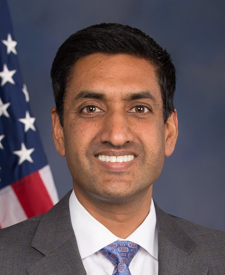 RKRo Khanna RKRo Khanna | D | CA | 12 |
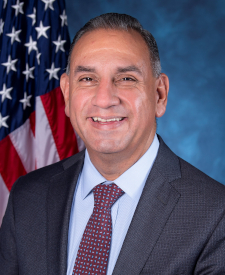 GCGilbert Cisneros GCGilbert Cisneros | D | CA | 10 |
 RBRobert Bresnahan RBRobert Bresnahan | R | PA | 9 |
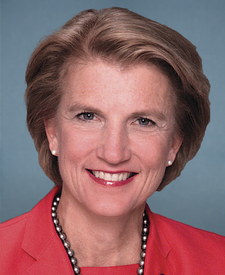 SCShelley Moore Capito SCShelley Moore Capito | R | WV | 7 |
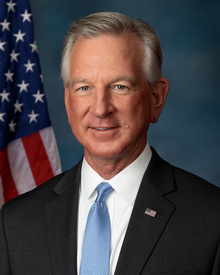 TTTommy Tuberville TTTommy Tuberville | R | AL | 7 |
Disclosed STOCK Act positions in the 15 largest tracked contractors. Look up any member on the Congress leaderboard or any contractor at who owns a stock.
9. Limitations and caveats
- The exemption is the law, not a scandal. The President's exclusion from §208 is the established legal position. Holding the stocks is legal and disclosed; this paper describes a structural condition, not a crime.
- Holding ≠ control or wrongdoing. Many of the 243 contractor positions are small and/or fund-held. The contractor overlap is a conflict-of-interest pattern, not proof that any holding influenced any official act.
- The parse is incomplete on some filings. The 588-ticker / 6,037-line-item figures are the output of an automated document parse (quality “good” on most filings, “partial” on a few). Notably, some prominent assets reported in the press — e.g., Trump Media (DJT) and World Liberty Financial — are not present as ticker-mapped equity lines in the current parse, so we do not state values for them. Counts are more robust than any single value.
- OGE brackets are wide. Values are reported in ranges; we use the maximum disclosed bracket per ticker and never impute a point estimate.
- Contract value is cumulative, not annual. The contractor dollar figures are multi-year USAspending totals (see the companion paper), not cash paid in a year.
- 278-T transactions are reported, not necessarily directed. The 804 purchases / 113 sales are what the periodic reports disclose; they are typically executed by account managers.
10. Conclusion
The asymmetry at the center of this paper is not contested and not hidden: the law that compelled the Cabinet to liquidate exempts the office above them. The measurable result is a presidential disclosure that still lists 588 public companies, 243 of them federal contractors — Lockheed Martin, the country's largest contractor, sitting in his personal six-figure bracket. None of it required a leak. GovGreed read what the Cabinet had to give up, then noticed who did not have to give up anything, and set the remaining portfolio next to the contracts those companies win. The exemption is a choice the system has made. The data simply make the choice legible.
Data availability
Primary sources. Holdings derive from the U.S. Office of Government Ethics public financial disclosures (Form 278e annual; Form 278-T periodic transaction reports). Contract figures derive from USAspending.gov; congressional holdings from STOCK Act disclosures.
Derived dataset. The OGE filings are parsed by GovGreed's document pipeline into structured line items (asset, bracket, transaction type) and matched to tickers; the method shared across the series is documented at GovGreed Research. The full 243-contractor list, the per-filing breakdown, and the Cabinet divestiture timeline are available on request — see “Sourcing this for a story?” below.
Reproducibility & verification
This is an independent working paper. It is produced by GovGreed Research and has not undergone external academic peer review. In place of peer review, every headline figure was re-derived live from the production database on the publication date against the primary federal records cited.
Verification protocol & a correction. Re-verification on the publication date caught and removed claims a prior draft had imported from press reporting rather than from our data: that Trump Media (DJT) and World Liberty Financial each exceeded $50M, plus specific crypto positions. Those assets are not present as ticker-mapped equity lines in the current OGE parse, so they have been removed and replaced with what the parse actually contains (Section 6) and flagged in Limitations. Bracket values in Table 2 were re-derived from the maximum disclosed bracket per ticker (e.g., Lockheed corrected to $100K–$250K).
Conflict of interest & funding
GovGreed is a commercial congressional-trading-intelligence platform; GovGreed Research is its analysis function. This paper received no external funding, and no person or entity named in it was given prior review. The analysis uses only public federal records and is released free to read, quote, and reproduce under CC BY 4.0 with attribution. Nothing here is a legal accusation against any individual.
Revision history
v2.1 · 2026-06-29 — Expanded analysis: added the portfolio-anatomy section (Figure 2 bracket distribution; the $1.67T / ~90%-of-all-contract-value finding) and the in-office vs. out-of-office transaction split (Table 3; 2025 = 664 buys / 3 sales).
v2.0 · 2026-06-29 — Re-verified all figures live. Correction: removed press-sourced claims not present in our parsed data (Trump Media/World Liberty/specific crypto each >$50M) and replaced §6 with the parse's actual largest holdings (Blue Owl Capital $5–25M; private Trump-org entities $25–50M). Table 2 brackets re-derived (Lockheed corrected to $100K–$250K). Companion-paper total updated $2.1T→$1.86T. Working-paper apparatus and data-availability statement added.
v1.0 · 2026-06-29 — Initial publication.
Frequently asked
Sourcing this for a story?
Free to use in a thread, article, or video — just credit GovGreed with a link to this page. Want the full 243-contractor list, the per-filing breakdown, or the Cabinet divestiture timeline? Email govgreed@gmail.com — usually 24–48h, free with a link credit.
References & data sources
- U.S. Office of Government Ethics — executive-branch financial disclosures (Form 278e annual, 278-T periodic). extapps2.oge.gov
- USAspending.gov — federal contract awards, summarized in Who the U.S. Government Actually Pays (GGR-WP-2026-01).
- 18 U.S.C. §208 — the executive-branch criminal conflict-of-interest statute; the President and Vice President are not covered.
- Cabinet & net worth — Cabinet money tracker · Trump net worth.
- Congressional holdings — STOCK Act disclosures via GovGreed's Congress database; per-ticker at who in Congress owns a stock.
- Image credits (public domain): President signing executive orders — The Trump White House; Cabinet meeting — The White House.
Keep pulling the thread
See the receipts — free
The cabinet, the President, and every member of Congress — what they own, set against the contracts, bills, and donors that move it. Free account: today’s top 10 signals + predictions. No card required.
Not financial advice. All data from public federal disclosures.